News
How does the wheel forging factory carry out forging?
In the process of forging wheel forgings, determining the forging steps is the key. First, we must draw the wheel forging diagram, design the size and shape of each step of the blank. The rough design of each process step is usually based on some wheel forgings for analogy, and then a simple volume calculation is carried out, and then combined with the experience of the designer to determine the determination. For the wheel forgings with complex shapes and multiple steps, the metal flow during the deformation process is based on experience and It cannot be accurately judged, and it is often necessary to debug and modify the new product during trial production. This method has a long debugging cycle and consumes much manpower and resources, which cannot adapt to market changes and product update requirements. With the rapid development of modern computer technology and plastic finite element technology, there are relatively mature software available for process simulation analysis at home and abroad. In particular, the process analysis software that can be run on a computer developed by Chinese scientific and technological personnel has been used in a batch of wheel forgings. The application has achieved good results in the process of formulating the process, and the conditions for popularization and application have been met.
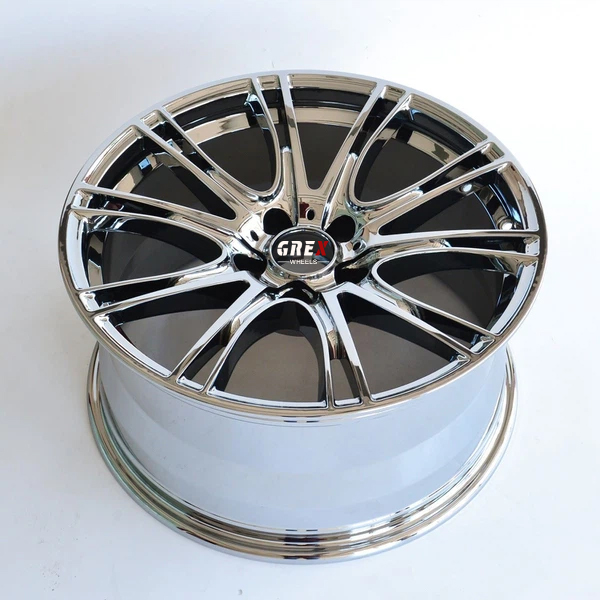
In order to increase productivity, ensure the quality of workpieces and improve working conditions, forging manipulators or robots are often used in forging production lines. The clamping position and stability of the blank must be considered in the process design. In order to ensure the consistency of the forging temperature and reduce oxidation, the forging billet is heated by induction heating.
Usually, the hot wheel forging drawing is calculated by multiplying the thermal expansion amount by the cold wheel forging drawing. However, when the size of each part of the fine wheel forging differs greatly, the part of the small size will cool faster, and the final forging temperature will be significantly different than the part of the larger size. At this time, different parts of the hot wheel forging drawing can be designed with different thermal expansion coefficients.
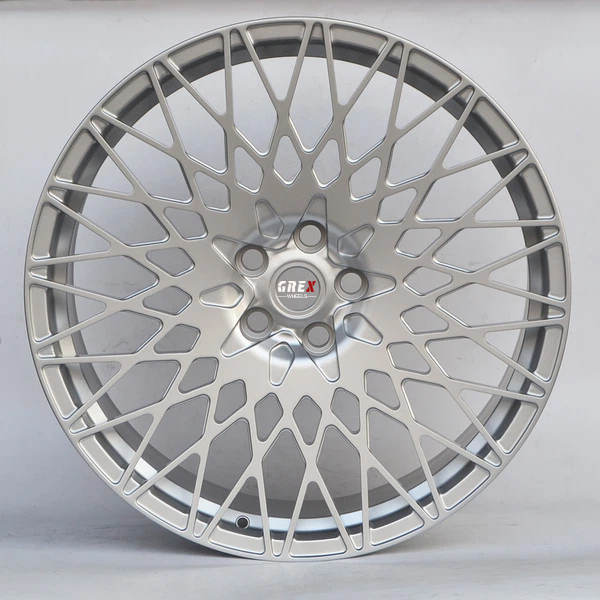
Forging according to the above steps can not only improve the accuracy of wheel forgings, but also save materials and reduce processing costs. Forging materials are mainly carbon steel and alloy steel with various compositions, followed by aluminum, magnesium, copper, titanium, etc. and their alloys. The original state of the material includes bar stock, ingot, metal powder and liquid metal. The ratio of the cross-sectional area of the metal before deformation to the cross-sectional area after deformation is called the forging ratio. The correct selection of forging ratio, reasonable heating temperature and holding time, reasonable initial forging temperature and final forging temperature, reasonable deformation amount and deformation speed have a great relationship to improve product quality and reduce costs.
According to the forming mechanism, forging can be divided into free forging, die forging, ring rolling, and special forging. Free forging is mainly for the production of wheel forgings in small batches. Simple universal tools are used to directly apply external force to the blank to deform the blank to obtain the required geometric shape and internal quality of the wheel and wheel forging processing method. The basic procedures of free forging mainly include upsetting, drawing, punching, cutting, bending, twisting, shifting and forging. Die forging is divided into open die forging and closed die forging. The metal blank is compressed and deformed in a forging die with a certain shape to obtain wheel forgings. Die forging is generally used to produce parts with low weight and large batches. Ring rolling refers to the production of ring-shaped parts with different diameters through a special equipment rolling machine, which is mainly used to produce wheel-shaped parts such as automobile hubs and train wheels. Special forging includes roll forging, cross wedge rolling, radial forging, liquid die forging and other forging methods, which are more suitable for the production of special-shaped parts. According to the formation mechanism, the forging methods that cannot be selected are used for processing. Of course, these methods do not exist independently, they are interdependent forging, and the forging methods play a very important role.
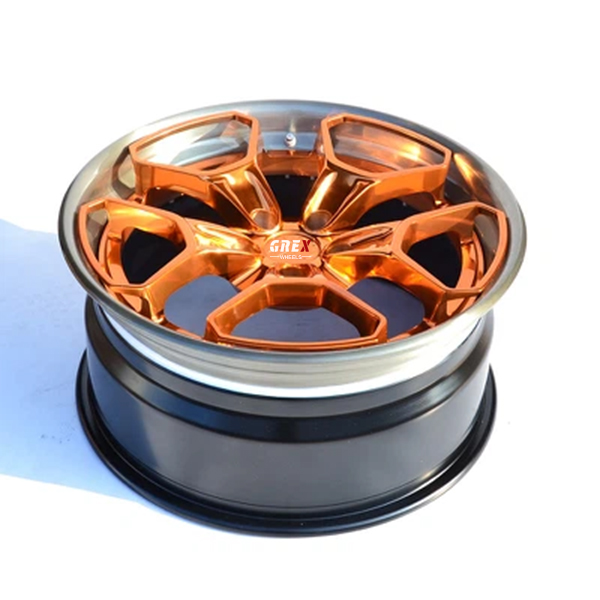
In addition to the usual materials for forging, such as carbon steel and alloy steel of various compositions, followed by aluminum, magnesium, copper, titanium, etc. and their alloys, iron-based superalloys, nickel-based superalloys, and cobalt-based superalloys The deformed alloys are also completed by forging or rolling, but these alloys are relatively difficult to forging due to their relatively narrow plastic zone. The heating temperature, opening forging temperature and final forging temperature of different materials have strict requirements.
RELATED NEWS
- 2025 Merry Christmas 2025-12-24
- The correct method for vleaning the wheel 2025-12-10
- GREX Extends Heartfelt Gratitude to Valued Customers This Thanksgiving 2025-11-26
- The automation of aluminum alloy wheel production in china is imperative 2025-11-12
- Misunderstandings that beginners of wheel modification should not fall into 2025-10-25
Categories
Latest News
Contact Us
Phone: +8615883654752
E-mail: Sales@grexwheels.com
Whatsapp:+8615883654752
Add: 81 Dongsheng Sub-district,Shuangliu District, Chengdu City, Sichuan Province, China
